Table of Contents
Introduction
The Alpine vs Ubuntu debate shows up in almost every container discussion.
Most discussions are based on opinions, not data.
So we tested a simple question:
Does the base image impact network performance?
Short answer: Yes — and the difference is measurable.
What We Tested
- Same host
- Same Docker setup
- Same network
- Alpine vs Ubuntu containers
time curl -s http://example.com > /dev/nullBenchmark Results
Performance Comparison

Benchmark Visualization
Why Alpine is Faster
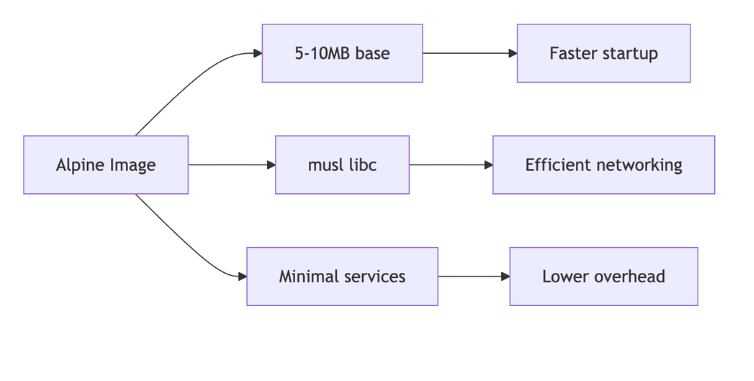
1. Lightweight Design

Less overhead = faster execution
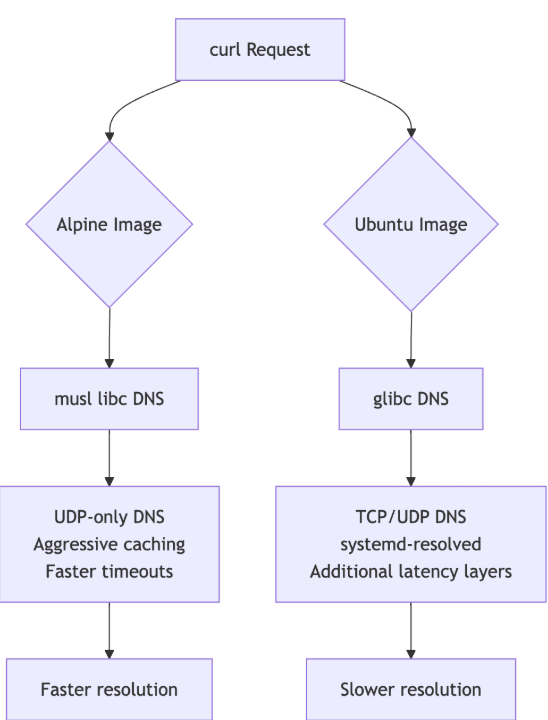
2. DNS Resolution
Alpine uses a simpler DNS stack.
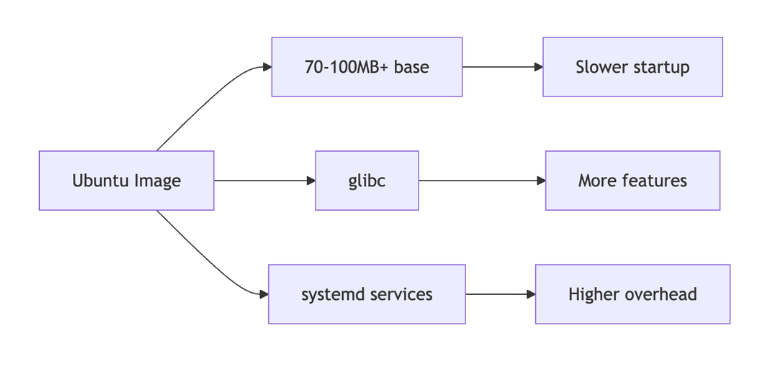
Ubuntu often includes:
- systemd-resolved
- additional layers
This adds slight latency per request.
3. Startup & Scaling Impact

Real Impact in Production
This matters in:
- Microservices
- APIs
- Kubernetes workloads
- Serverless containers
Even small latency differences multiply across services.
Final Verdict

Also explore related topics:
- 👉 Terraform cost optimization using GCP Billing Kill Switch
- 👉 Kubernetes logging: Fluent Bit vs Grafana Alloy comparison
- 👉 Terraform with AI automation using Cursor MCP
The Alpine vs Ubuntu debate is often opinion-driven.
But once you measure it, the result is straightforward.
Alpine is not just smaller —
it is consistently faster in network-heavy scenarios.
In distributed systems, even small latency improvements matter.
Stop debating. Start measuring.
FAQ
Is Alpine always faster than Ubuntu?
No. It depends on workload, but Alpine is often faster in network-heavy scenarios.
Why is Alpine faster?
Because of smaller size, lightweight libraries, and simpler DNS.
Should I always use Alpine?
No. Use Alpine for performance and Ubuntu for compatibility.
Does base image affect performance?
Yes. It impacts startup time, latency, and resource usage.
Recent Posts